

Emergency Escape Breathing Devices (EEBDs) occupy a very specific, and often misunderstood, position within modern health and safety management. They are not general-purpose respiratory protection devices, nor are they substitutes for self-contained breathing apparatus (SCBA). Instead, EEBDs exist for one reason only: to keep a person alive long enough to escape from an environment that has suddenly become unbreathable.
For health and safety professionals responsible for high-risk and confined environments, EEBDs sit squarely within life safety equipment requirements and emergency preparedness planning. Their value is realised only under extreme conditions—smoke, toxic gases, oxygen deficiency— where immediate, emergency escape is the only option
This guide is written as a comprehensive technical reference for 2026. It explains what an EEBD is, where and why EEBDs are required, how long they last, how they differ from SCBA, and how they should be integrated into confined space escape plans and respiratory risk assessments, as well reflecting current international standards and inspection expectations.
Understanding EEBDs in the Context of Life Safety
An Emergency Escape Breathing Device, also known as Emergency Escape Breathing Apparatus, is a self-contained breathing device designed exclusively for emergency escape from a hazardous atmosphere. It provides the wearer with an independent breathing supply—either compressed air or chemically generated oxygen—so they can move from danger to safety without inhaling toxic substances or suffering the effects of oxygen deprivation.
From a safety engineering perspective, EEBDs are best understood as last-line controls. They do not prevent incidents and they do not mitigate exposure over extended periods. Instead, they address the critical gap that exists between the onset of an atmospheric hazard and successful evacuation.
This distinction is essential when documenting EEBDs within a respiratory risk assessment. EEBDs are not normally a “primary” control; they are an emergency provision that assumes all other controls may fail under abnormal or emergency conditions.
Why EEBDs Are Critical in Confined Spaces
Confined spaces are characterised by restricted means of entry and exit, limited natural ventilation, and a heightened risk of atmospheric hazards. These hazards can develop rapidly and without warning, particularly in environments involving:
- combustion processes or hot work
- stored or transported chemicals
- biological decomposition or wastewater processes
- inert gases used for purging or blanketing
- mechanical or electrical fires in enclosed plant
Once a confined space atmosphere becomes unsafe, escape time is measured in seconds rather than minutes. Disorientation, panic, and increased breathing rates quickly compound the hazard.
An EEBD enables a person to breathe independently of the surrounding environment, preserving consciousness and mobility long enough to complete a confined space escape plan. Without such protection, even a well-designed egress route may be unusable if the atmosphere cannot support life.

Where EEBDs Are Typically Required
EEBD requirements are rarely universal; they are driven by risk, not by convenience. In practice, EEBDs are most commonly deployed across multiple industries that share similar characteristics: enclosed or semi-enclosed spaces, complex infrastructure, and credible risks of atmospheric contamination.
These include, but are not limited to:
- underground and enclosed transport infrastructure
- industrial process environments
- laboratories and pharmaceutical facilities
- utilities and water treatment works
- secure facilities and institutional environments
- marine, offshore, and energy installations
In each case, the deciding factor is not the industry itself but whether a sudden loss of breathable air would prevent safe escape without respiratory protection. Where that risk exists, EEBDs are frequently considered a proportionate and defensible control.
Global Standards and Regulatory Frameworks
SOLAS and Maritime Requirements
Internationally, the most explicit EEBD requirements are found in maritime regulation. Under the International Convention for the Safety of Life at Sea (SOLAS), EEBDs are required in specific shipboard locations, particularly machinery spaces where fire and smoke pose an immediate threat to life.
The International Maritime Organization (IMO), through the Fire Safety Systems (FSS) Code, establishes minimum expectations for EEBDs used in these environments. These include requirements around:
- minimum service duration
- flame-resistant construction
- protection of the eyes, nose and mouth
- ease and speed of donning
- clear instructions and markings
ISO 23269-1 further defines performance requirements for shipboard EEBDs, reinforcing their role as escape-only devices and explicitly stating that they are not suitable for firefighting or entry into oxygen-deficient voids.
Industrial and Occupational Safety Contexts
Outside maritime applications, EEBDs are governed less by prescriptive rules and more by general duties under occupational health and safety law. In most jurisdictions, employers must assess risks, eliminate them where reasonably practicable, and provide appropriate controls where elimination is not possible.
Within this framework, EEBDs are typically justified when a respiratory risk assessment identifies:
- a credible risk of sudden oxygen deficiency or toxic exposure
- a reliance on egress for survival rather than continued work
- a limited time window in which escape must occur
Inspectors and auditors increasingly expect to see not only the presence of EEBDs, but clear reasoning linking their specification, placement, and duration to the identified risks.
EEBD vs SCBA: A Fundamental Distinction
One of the most persistent sources of confusion in safety documentation is the distinction between EEBDs and SCBA.
An EEBD is designed for escape only. Its duration is short, its design prioritises rapid donning and minimal complexity, and its performance assumptions are aligned with evacuation rather than task completion.
SCBA, by contrast, is designed for work and rescue. It supports extended duration, controlled breathing, and active intervention in hazardous atmospheres. It requires extensive training and ongoing competence management.
From a technical and legal standpoint, substituting an EEBD where SCBA is required is unsafe. Equally, deploying SCBA where an EEBD would suffice may introduce unnecessary complexity, cost, and training burden. A mature safety system recognises that these devices serve different purposes and should be specified accordingly.
How Long Does an EEBD Last?
EEBD duration is one of the most frequently asked—and most frequently misunderstood—questions.
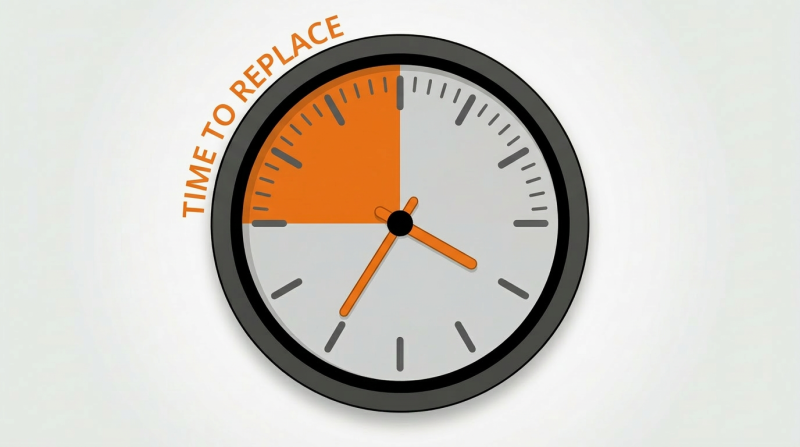
Most EEBDs are rated for 10 to 20 minutes of service duration under defined test conditions. This rating reflects typical escape scenarios rather than sustained work. Some manufacturers also publish longer “at rest” durations, but these should never be used as planning assumptions for emergency escape.
In real incidents, breathing rates increase significantly due to stress, exertion, and heat. A conservative safety approach assumes that the effective duration of an EEBD will be closer to its minimum rated escape time rather than any theoretical maximum.
For health and safety professionals, the correct question is not “how long does the EEBD last?” but “is the rated duration sufficient for the longest credible escape route under worst-case conditions?”
Types of EEBDs and Escape Breathing Systems
EEBDs and related escape breathing systems vary in design, but all share the same fundamental objective: independent breathing during escape.
Escape-Only EEBDs
These are compact, self-contained units designed to be donned quickly and used immediately. They are often stored in wall-mounted cases or carried in belt packs in high-risk areas. Their simplicity is deliberate; during an emergency, cognitive load must be kept to a minimum.
Extended-Duration Escape Apparatus
In some environments, escape distances are longer or more complex. Extended-duration escape apparatus provides additional margin without crossing into full SCBA territory. These systems are still escape-focused but allow for longer or more demanding evacuation routes.
Working and Rescue Breathing Apparatus
Some operations require personnel to remain in a hazardous atmosphere briefly to assist others or stabilise conditions. In these cases, working or rescue breathing apparatus is more appropriate than an EEBD. While related, these systems should be clearly distinguished in risk assessments and procedures to avoid misuse.
Manufacturers such as Semmco LPS offer equipment across these categories, allowing organisations to align device capability with operational need rather than forcing a single solution across all scenarios.
Integrating EEBDs into Confined Space Escape Planning
An EEBD is only effective if it can be reached, donned, and used correctly under stress. Integration into confined space planning therefore requires more than procurement.
The respiratory risk assessment should clearly describe the scenarios in which an EEBD would be used, the triggers for use, and the assumptions underpinning its effectiveness. This includes escape distances, expected congestion, lighting conditions, and the physical demands of egress.
Placement should reflect real working conditions, not idealised diagrams. If an EEBD cannot be reached without passing deeper into a hazard zone, it will not be used. Likewise, storage systems must allow rapid access while preventing tampering or accidental activation.
Training is equally critical. Even the most intuitive device requires familiarisation. Practising donning, movement, and decision-making under simulated stress conditions transforms an EEBD from a theoretical control into a functional one.

Technical Considerations for 2026 Safety Systems
As safety management becomes more data-driven, expectations around justification and documentation are increasing. For EEBDs, this means:
- clearly linking device duration to escape modelling
- documenting why escape-only protection is appropriate
- demonstrating compatibility with other PPE
- recording inspection, maintenance, and replacement intervals
- ensuring alignment with emergency drills and incident response plans
In confined spaces, EEBDs should be treated as part of a system, not as isolated items of equipment. Their effectiveness depends on how well they integrate with detection systems, alarms, signage, training, and human behaviour under stress.
EEBD Use Cases: How and When Emergency Escape Breathing Apparatus Is Actually Used
Understanding EEBDs in theory is straightforward; understanding how they are used in real incidents is where most safety documentation falls short. In practice, EEBDs are deployed during low-frequency, high-severity events where conditions deteriorate rapidly and escape must begin immediately. These scenarios are not hypothetical—they are the precise failure modes that confined space regulations and life safety equipment requirements are designed to address.
The following use cases reflect how EEBDs function operationally across multiple industries, including transport infrastructure, utilities, laboratories, secure facilities, industrial processing, and marine or offshore environments.
Sudden Atmospheric Contamination in Confined Spaces
One of the most common EEBD use cases involves an unexpected change in atmospheric conditions inside a confined space. This may be triggered by a chemical release, a process upset, a valve failure, or the ingress of smoke from an adjacent compartment.
In these scenarios, the atmosphere may become immediately toxic or oxygen-deficient, leaving little or no time for evacuation without respiratory protection. An EEBD allows the wearer to isolate their breathing from the environment long enough to exit the space via the planned escape route.
From a respiratory risk assessment perspective, this use case is particularly defensible because the EEBD is not relied upon to enable continued work. It is explicitly tied to escape, aligning with both regulatory intent and human behaviour under emergency conditions.
Loss of Ventilation or Oxygen Deficiency
Ventilation failure is a critical but often underestimated hazard in confined or enclosed environments. Mechanical ventilation systems may fail due to power loss, fire, mechanical damage, or control system faults. In other cases, oxygen may be displaced by inert gases used for purging, blanketing, or fire suppression.
In these events, oxygen levels can drop below safe thresholds without obvious warning signs. Symptoms such as dizziness and impaired judgement can occur before workers recognise the danger. An EEBD provides immediate respiratory protection, preserving consciousness and coordination during evacuation.
This use case is particularly relevant where confined space requirements rely heavily on ventilation as a primary control. The EEBD acts as a contingency when that control is lost.
Smoke Ingress from Fires in Adjacent Areas
EEBDs are frequently specified for environments where a fire may not occur locally but where smoke can migrate rapidly through ducts, tunnels, corridors, or interconnected compartments.
Smoke inhalation remains one of the leading causes of fatalities in fire-related incidents. Even when fire detection and suppression systems operate correctly, smoke spread can render escape routes impassable within minutes.
In this use case, the EEBD protects against combustion by-products rather than chemical releases. The device enables the wearer to maintain visibility, mobility, and breathable air while moving through smoke-filled escape routes to a place of safety.
This application reinforces why EEBDs should be positioned along escape paths and not solely within the immediate work area.
Emergency Escape During Maintenance or Inspection Activities
Maintenance, inspection, and cleaning activities often introduce elevated risk because normal process controls may be bypassed, isolated, or temporarily altered. Confined spaces that are normally safe during steady-state operations can become hazardous during shutdowns, purges, or recommissioning.
An EEBD in this context supports emergency escape when unexpected conditions arise, such as residual gases, incomplete purging, or cross-contamination from adjacent systems. It is particularly relevant where contractors or non-routine personnel are involved, as familiarity with escape routes may be lower.
For health and safety professionals, this use case highlights the importance of including EEBDs in permit-to-work systems and pre-task risk briefings.
Escape Following Detection System Activation or Alarm Events
Gas detection systems, oxygen monitors, and fire alarms are designed to provide early warning—but they do not guarantee that the atmosphere remains safe long enough for unprotected escape.
In many real incidents, alarms trigger only after a hazardous threshold has been crossed. An EEBD bridges the gap between detection and safe evacuation, allowing the wearer to act decisively rather than hesitating or attempting to assess conditions subjectively.
This use case aligns closely with behavioural safety principles. When alarms activate, workers should not be required to make complex decisions about whether the air is still breathable. The presence of an EEBD simplifies the response: don the device and evacuate.
Assisted Escape in Non-Rescue Scenarios
While EEBDs are not rescue devices, they are sometimes used in scenarios where a worker must assist another person during escape, without remaining in the hazardous environment for prolonged periods.
For example, a worker may help guide a disoriented colleague to an exit or support someone experiencing stress-induced breathing difficulty. In these situations, the EEBD protects the wearer while enabling brief, escape-focused assistance.
This use case sits at the boundary between escape-only protection and working or rescue breathing apparatus. It reinforces the importance of clearly defining acceptable use in procedures and training, so workers do not attempt tasks beyond the device’s intended capability.
Emergency Egress in Complex or Extended Escape Routes
Not all escape routes are short or straightforward. Some environments involve long corridors, vertical ladders, multiple hatches, or changes in direction and elevation. In these cases, the physical effort required to escape increases breathing demand and stress.
EEBDs with appropriate rated duration provide an essential margin in these scenarios. They account for real-world factors such as congestion, reduced visibility, and the need to maintain balance and coordination during movement.
This use case underscores why EEBD selection should be based on worst credible escape time, not average conditions or theoretical travel speeds.
Final Thoughts
EEBDs are not about convenience or compliance optics. They are about acknowledging that, in certain environments, escape is the only viable survival strategy when atmospheric conditions deteriorate.
For health and safety professionals in 2026, the challenge is not simply selecting an EEBD, but ensuring that its presence is technically justified, operationally realistic, and fully integrated into confined space and emergency planning. When that alignment is achieved, EEBDs quietly fulfil their role as one of the most critical components of modern life safety systems.
