

A practical guide for safety managers responsible for confined spaces and emergency preparedness
In many industrial environments, emergencies involving smoke, toxic gases, or oxygen deficiency can develop rapidly and with little warning. A fire in an engine room, a chemical leak inside a processing vessel, or a sudden drop in oxygen levels within a confined space can quickly create conditions where the surrounding atmosphere becomes unsafe to breathe. When situations like this occur, workers may have only a limited amount of time to recognise the hazard and move to safety.
In these circumstances, equipment such as an emergency escape breathing device (EEBD), escape breathing apparatus, or respirator hood can provide the critical window needed for evacuation. These systems are designed to supply breathable air or filter harmful smoke and gases long enough for individuals to exit the affected area. While they are not intended to support extended rescue operations, they play a vital role in helping workers escape environments that have suddenly become life-threatening.
Across industries including maritime, utilities, infrastructure, energy production, chemical processing, and manufacturing, this type of emergency respiratory equipment forms an essential part of workplace safety systems. It is particularly important in environments where employees may be working in confined spaces, such as tanks, cargo holds, utility tunnels, pump stations, or underground vaults. In these locations, hazardous atmospheres can develop quickly due to chemical reactions, gas accumulation, or restricted airflow.
For safety managers responsible for developing and maintaining a confined space rescue plan, understanding how breathing equipment is used during real emergencies is essential. Many incidents involving respiratory protection do not occur because the equipment itself fails. Instead, they often result from delays in recognising atmospheric hazards, uncertainty about how the equipment should be used, poor maintenance practices, or escape devices being positioned too far away from the workers who need them.
Examining real-world incidents and case studies helps organisations understand how these failures occur and what can be done to prevent them. By learning from documented events, safety teams can strengthen their confined space rescue system, improve training programmes, and ensure equipment is positioned and maintained in ways that support effective emergency response.
Why Escape Breathing Equipment Matters in Confined Space Safety
Confined spaces continue to present some of the most challenging safety risks across a wide range of industries. Spaces such as storage tanks, cargo holds, sewer systems, underground vaults, and enclosed machinery compartments are designed for operational purposes rather than human occupancy. As a result, ventilation may be limited, atmospheric conditions can change rapidly, and workers may have very little time to respond if something goes wrong.
More recent research provides additional context on rescuer fatalities in confined space incidents. While early guidance from the National Institute for Occupational Safety and Health (NIOSH) suggested that over 60% of confined space deaths involved would-be rescuers, a 2018 analysis found that no more than around 17% of fatalities involved rescuers attempting to assist others. The study concluded that the earlier figure likely reflected a selected subset of incidents rather than the full dataset of confined space fatalities. Even so, the number of rescuer fatalities remains significant, as rescue attempts expose workers to the same hazardous atmospheres that caused the initial incident.
The environments in which these incidents occur often contain similar hazards. Oxygen levels may be depleted due to chemical reactions, biological activity, or displacement by other gases. Toxic gases such as hydrogen sulphide, methane, or carbon monoxide may accumulate unnoticed. In other situations, fires within enclosed areas can quickly produce smoke that reduces visibility and introduces dangerous combustion gases into the atmosphere.
When these hazards are present, workers may experience symptoms such as dizziness, confusion, or unconsciousness within minutes. Without immediate access to respiratory protection, escaping the space may become extremely difficult.
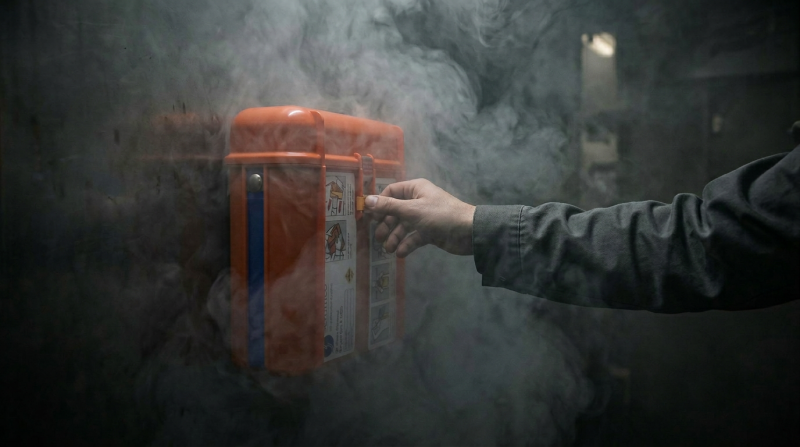
This is where emergency escape breathing equipment becomes essential. Devices designed for escape typically provide between ten and fifteen minutes of breathable air, which is usually sufficient for evacuation when escape routes are clearly defined and workers are able to act quickly.
However, this limited supply of air also means that escape equipment must be used correctly and deployed without hesitation. If workers struggle to activate the device, cannot reach it quickly, or are unaware of how it functions, the available escape window can be significantly reduced.
How Escape Equipment Fits into a Confined Space Rescue System
Emergency breathing devices should never be considered a standalone solution. Instead, they form part of a broader confined space rescue system designed to prevent incidents and protect workers if conditions deteriorate.
A comprehensive system typically combines several layers of safety controls. These may include atmospheric monitoring equipment that detects hazardous gases, ventilation systems that improve air quality, and entry permit procedures that confirm conditions have been tested before workers enter a confined space. Training programmes also play an important role, ensuring that workers understand the hazards associated with enclosed environments and the steps they should take if something goes wrong.
Within this system, escape equipment provides an important safeguard for workers inside the space. If atmospheric conditions suddenly change, the device allows them to breathe safely while moving toward an exit.
Rescue teams, however, rely on different equipment. When trained personnel enter a hazardous environment to assist others, they typically use breathing apparatus capable of supplying air for a much longer period. This equipment forms part of specialised confined space rescue equipment kits used by trained responders.
Understanding the distinction between escape devices and rescue breathing apparatus is extremely important. Escape equipment is intended to support evacuation only. Attempting to use it during a rescue operation can quickly exhaust the available air supply, leaving the rescuer exposed to the hazardous atmosphere.
Real-World Incidents Involving Breathing Equipment Failures
Examining documented incidents helps illustrate how failures involving breathing equipment can occur in real operational environments. These examples highlight common patterns that safety managers should be aware of when developing rescue procedures and training programmes.
Chain Locker Fatality – Oxygen Deficiency in a Maritime Confined Space
One widely referenced maritime incident occurred inside a ship’s chain locker, a confined space used to store anchor chains. Investigations reported by the UK Marine Accident Investigation Branch (MAIB) revealed that oxygen levels inside the locker had fallen to dangerously low levels.
A crew member entered the space and quickly collapsed due to oxygen deficiency. When colleagues realised something was wrong, a second seafarer attempted to rescue him while wearing an emergency escape breathing device. During the rescue attempt, the hood seal was compromised or became dislodged, exposing the rescuer to the oxygen-deficient atmosphere.
A third crew member entered the space in an effort to help both men. Tragically, all three seafarers succumbed from lack of oxygen.
This incident illustrates how quickly conditions inside confined spaces can become fatal and how easily rescue attempts can escalate when the risks are not fully understood.
Preventing similar incidents
Preventing this type of tragedy requires several practical measures. First, workers must clearly understand the limitations of escape equipment. Devices designed for evacuation cannot support extended rescue operations. Once a hood seal is broken or removed, the wearer is immediately exposed to the surrounding atmosphere.
Safety managers should ensure that confined space rescue training emphasises the distinction between escape equipment and rescue breathing apparatus. Workers must know that rescue operations should only be carried out by trained teams equipped with specialised confined space breathing apparatus equipment.
Atmospheric monitoring should also be a standard part of confined space entry procedures. Before anyone enters an enclosed area, oxygen levels and gas concentrations should be tested using calibrated detection equipment. If monitoring identifies dangerous conditions, entry should not proceed until appropriate control measures are implemented.
Cargo Hold Asphyxiation – Oxygen Depletion Following Fumigation
Another incident occurred aboard a bulk carrier transporting agricultural cargo that had been fumigated during transit. Fumigation is commonly used to control pests in cargo shipments, but the process can significantly affect oxygen levels inside enclosed spaces.
In this case, the cargo hold had been sealed for several days following fumigation. When two contractors entered the hold without respiratory protection, they encountered an atmosphere with dangerously low oxygen levels. Both workers were overcome within minutes, and one died as a result of asphyxiation.
This type of incident has been documented several times in maritime operations. Cargo holds containing organic materials can experience oxygen depletion due to biological activity, while fumigation gases may further displace oxygen within the space.
Preventing similar incidents
The most effective way to prevent incidents like this is through rigorous atmospheric monitoring. Before workers enter a cargo hold or similar space, oxygen levels must be tested to ensure they fall within safe limits.
Entry permits should require confirmation that atmospheric testing has been completed and that the results have been reviewed by authorised personnel. If hazardous conditions are detected, workers should not enter the space without appropriate confined space breathing equipment.
Training programmes should also emphasise that confined spaces may appear safe even when dangerous atmospheres are present. Workers should never rely on visual cues alone when assessing atmospheric conditions.
Tank Entry Fatality – Escape Attempt Using Emergency Equipment
Another case often discussed in maritime safety investigations involved the vessel Sharp Lady, where crew members entered a tank containing hazardous gases.
After entering the tank, the Chief Officer and a cadet realised that the atmosphere was unsafe. They attempted to activate their emergency escape breathing devices and leave the tank. Despite their efforts, the incident resulted in one fatality and a near-fatality.
The investigation concluded that by the time the crew recognised the danger, exposure to toxic gases had already impaired their ability to escape.
Preventing similar incidents
This case highlights the importance of hazard recognition before entry rather than relying on escape equipment after exposure has occurred.
Atmospheric testing should always be conducted before entering enclosed tanks or similar environments. Continuous monitoring may also be appropriate in spaces where atmospheric conditions can change quickly.
Workers should be trained to respond immediately if gas detectors alarm or if they experience symptoms such as dizziness or shortness of breath. Early evacuation is often the most effective way to prevent serious injuries.
Confined Space Triple Fatality During Rescue Attempt
Confined space accidents frequently follow a tragic pattern in which initial victims are followed by additional casualties during rescue attempts.
One documented example involved a worker entering a poorly ventilated space where hydrogen sulphide gas had accumulated. The worker collapsed soon after entering the space.
A colleague rushed in to help and was also overcome by the gas. Additional rescuers entered the space in an attempt to assist. The incident ultimately resulted in multiple fatalities.
This pattern has been observed repeatedly in confined space investigations. When workers see a colleague collapse, their instinct is often to help immediately. Unfortunately, entering the space without breathing protection exposes them to the same hazardous atmosphere.
Preventing similar incidents
Organisations can reduce the likelihood of these tragedies by clearly defining rescue procedures and ensuring workers understand the risks involved.
Training should emphasise that entering a hazardous confined space without appropriate breathing protection is extremely dangerous. Workers should be encouraged to activate emergency response procedures rather than attempting rescues themselves.
Rescue teams equipped with appropriate confined space entry rescue equipment should be available whenever work is conducted in high-risk environments.
Sewer Manhole Fatality – Utility Infrastructure Hazards
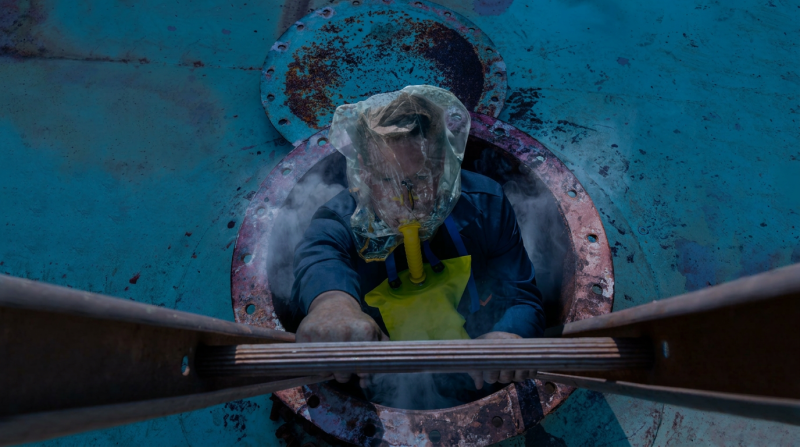
In 2022, two construction workers died inside a sewer manhole in the United States after entering the confined space without adequate respiratory protection.
Sewer systems can contain hazardous gases including hydrogen sulphide and methane. These gases can accumulate quickly and may not be detectable without specialised monitoring equipment.
When the workers entered the manhole, they were exposed to a dangerous atmosphere and collapsed shortly afterward.
Preventing similar incidents
Utility and infrastructure operations should incorporate strict confined space entry procedures. Atmospheric testing should be conducted before entry and repeated periodically while work is underway.
Workers should also be familiar with the location of emergency escape equipment and evacuation routes.
Having appropriate confined space rescue equipment kits available ensures that trained responders can enter the space safely if rescue becomes necessary.
Submarine Incident – Oxygen Displacement in Enclosed Compartments
One of the most severe breathing-related incidents occurred aboard the Russian submarine K-152 Nerpa in 2008. During a training exercise, a fire suppression system accidentally released gas into a compartment, displacing oxygen within the enclosed space.
Crew members attempted to use emergency breathing masks, but several devices malfunctioned or stopped functioning after a short period. Others could not be deployed quickly enough.
The accident resulted in 20 fatalities, highlighting how rapidly oxygen displacement can create life-threatening conditions.
Preventing similar incidents
This incident demonstrates the importance of maintaining emergency equipment and ensuring personnel are familiar with how to use it.
Regular inspection programmes should confirm that breathing devices are fully operational and ready for use. Training exercises should also provide opportunities for workers to practise deploying equipment under realistic conditions.
When people are familiar with their equipment and confident in its operation, they are far more likely to respond effectively during emergencies.
Key Takeaways for Safety Managers
The incidents discussed in this article demonstrate that failures involving escape breathing equipment are often preventable. In most cases, the underlying hazard was known or predictable, but the response systems in place were not sufficient to protect workers.
Safety managers can significantly reduce risk by ensuring that escape equipment is accessible, properly maintained, and matched to the hazards present in each environment. Atmospheric monitoring should always be conducted before workers enter confined spaces, and rescue procedures should clearly define how incidents will be managed if conditions deteriorate.
Training also plays a crucial role. Workers who understand the risks associated with confined spaces and are familiar with emergency equipment are far better prepared to respond effectively when something goes wrong.
By integrating escape equipment into a comprehensive confined space rescue system, organisations can improve emergency preparedness and create safer working environments across maritime, industrial, and infrastructure sectors.
